
Recognising the importance of semiconductors for ensuring European technological sovereignty and strategic autonomy, the European Union (EU) enacted the Chips Act in 2023 to strengthen its semiconductor ecosystem.

This EU Chips Act has three components or pillars:
- The Chips for Europe Initiative;
- Support for ‘first-of-a-kind’ chips production facilities in Europe; and
- Setting up a mechanism for mapping and monitoring the European semiconductor sector as well as for crisis prevention and crisis management in case of shortages.
The Chips Act 2023 aims to stimulate €43 billion in public investment and a similar amount in private investment to raise the share of Europe in global chips production from 10% to 20% by 2030.
The Chips for Europe Initiative (Pillar I) is designed to address challenges at all stages of semiconductor value chains from materials and tools to fabrication, packaging, and testing.
It has five main elements:
- A Design Platform to bring together all key actors in chips ecosystem and to close the gap between research and industry;
- Pilot Lines to boost development and deployment of cutting-edge semiconductor technologies;
- Quantum Chips or accelerating their development and that of associated technologies;
- Competence Centres to enable technical training and experimentation around semiconductors; and
- A Chips Fund to ensure access to finance for investment in semiconductors especially for start-ups, SMEs, scale-ups, etc. It is funded through Horizon Europe and Digital Europe programs.
Except for the Chip Fund, the Initiative is administered by the Chips Joint Undertaking (Chips JU) with a budget of around €11 billion. The Chips JU comprises of three types of members:
- European Commission
- Thirty-three European countries (27 EU member-states and 6 non-members such as Norway, Türkiye, UK, etc)
- Three industrial associations as private members. These are AENEAS, EPoSS, and INSIDE Industry Association.
Clearly the legislation does not lack ambition. But how has it performed so far?
European Union Chips Act 2023: A Report Card
Within a year of its enactment, the European Commission had accepted that that by 2030, Europe’s market share of global semiconductor production would reach 11.7% rather than 20% targeted by the Act.
Nevertheless, the EU can claim to have achieved reasonable progress in meeting many of the Act’s stated objectives.
The Acheivements
Under the Chips for Europe Initiative (Pillar I), the Chips JU has already set up or is in the process of setting up:
- EuroCDP, a design platform that is expected to serve as an online marketplace where tools, designs, IP, expert services, training, and funding can all be had in one place.
- Five Pilot Lines: These are NanoIC (coordinated by IMEC Belgium and focused on sub-2nm leading edge SoC technology); FAMES pilot line (coordinated by CEA-Leti France and focused on FD-SOI technologies); WBG pilot line (coordinated by National Research Council of Italy); PIXEurope (coordinated by Spain’s Institute of Photonic Sciences); and APECS or Advanced Packaging and Heterogeneous Integration for Electronic Components and Systems pilot line (coordinated by Germany’s Fraunhofer-Gesselschaft).
- Competence Centres in almost all EU member-states and Norway.
- Six projects as part of €200 million investment in Quantum Chips.
The Chips Fund has also supported numerous start-ups and SMEs through equity or grants. By the end of 2025, €44 million in grants and €152 million in equity had been committed across 19 projects through this Fund.
Under the second pillar of the Act, the European Commission has approved thirteen ‘first-of-a-kind’ (FOAK) semiconductor projects involving a total investment (public and private) of €34 billion. These include facilities for companies such as ST Micro & Global Foundries (300-mm FD-SOI), ST Microelectronics (SiC wafers), Silicon Box (advanced packaging), Ephos (photonic chips), Carl Zeiss (EUV lithography optics), etc.
The third pillar of the Act has been implemented by establishing the European Semiconductor Board It is composed of representatives from the EU member states and the European Commission and has a fairly broad mandate. It not only coordinates with member-states but also advises the European Commission on implementation of the Act and other related policies and programs as well as on formulation of new legislative and policy initiatives.
The Shortcomings
A special report of the European Court of Auditors in December 2025 acknowledged that the Act had provided ‘new impetus for action’ in this crucial sector but also highlighted its following shortcomings:
- Insufficient funding: The European Commission itself provides only about 10% (€4.5 billion) of the public funding required for implementing the Act. The member-states and private investors are supposed to provide the substantial percentage of funds needed. The private investment has also fallen considerably short of expectations.
- EU Structural Problems: The European Commission lacks the mandate to coordinate national investments at EU level to align them with the goals of the Chips Act. As a result, it does not have sufficient information on investments in the sector and cannot effectively monitor progress and deal with gaps and overlaps. Also, the Commission cannot coordinate support to the industry in the form of tax incentives as it is the prerogative of the member-states. The commission also has no information on it although uncoordinated use of such tax incentives creates a risk of competition between member-states that can undermine the objectives of the EU Act.
- Lack of clarity on timetables and monitoring: The Act does not contain measurable targets for any of the three pillars. The only such target is to reach 20% market share in the global cutting-edge chips production by 2030 which would require the production capacity in Europe to be quadrupled. Clearly it is not achievable by that year and the Commission has accepted it.
- Concentration of Funding: A small number of large companies and projects have received most of the funding. It is inevitable in a highly capital-intensive industry as semiconductor, but it also increases risk as cancellation or delay of even one major project can significantly derail the Act’s strategic objectives.
- Lack of alignment with European Industry’s current demand: While the Act focuses on cutting-edge or smaller-sized microchips, the demand for such chips in Europe is likely to be low in short to mid term. Most of the demand currently is for 65-90 nm chips and a significant portion of it is being met by imports from China.
Apart from these, there are also other problems such as high labour costs, high energy prices, environmental laws, and complicated bureaucratic procedures that negatively affect European competitiveness for setting up of fabrication facilities as compared to other regions.
Towards European Chips Act 2.0
On 3rd June 2026, the European Commission presented its proposal for a follow-up legislation to the European Chips Act 2023 as part of its Technological Sovereignty Package.
It identified two overarching objectives for the European Chips Act 2.0:
- To increase the competitiveness of the European semiconductor value chain to improve its technological sovereignty and resilience; and
- To enhance crisis preparedness to ensure EU’s security of supply.
While the first Chips Act was supply-driven, this proposal places greater emphasis on stimulating demand for cutting-edge AI chips by developing new data centres across Europe. Simultaneously, it boosts the production of legacy chips to meet the needs of European industrial sectors such as automative, aeronautics, defence, etc.
The proposed EU Chips Act 2.0 clarifies the provisions on FOAK projects to cover the entire semiconductor value chain from design to packaging. It provides for quicker industrialisation of pilot lines. It reinforces the Chips for Europe Initiative by adding photonics and photonic integrated circuits to it. To incentivise regional leadership, it has proposed a European Semiconductor Region of Excellence label for regions with substantial investment in semiconductor ecosystem aligned with EU strategic priorities.
In pursuit of the second objective, the proposed Chips Act 2.0 supports the setting-up of a Business-to-Business Semiconductor Supply Chain Platform which will allow the companies to share non-commercially sensitive information in an aggregated form. This will enable systematic identification of risks and prompt alerts of disruptions. In such cases, the Commission could request information from the Platform as well as individual companies. The Commission will also set up an EU Blueprint for Semiconductor Crisis Management by the middle of 2027 which would define clear procedures, roles, and responsibilities for pre-crisis and crisis phases by building on the first crisis simulation exercise conducted by member-states in 2025.
Conclusion
The European Chips Act 1.0, despite some shortcomings, has been reasonably successful in mobilising significant investment for semiconductor industry, setting-up state-of-the art technology infrastructures such as pilot lines, competence centres, etc as well as establishing some mechanism for monitoring, anticipating, and managing critical shortages and disruptions.
The proposal for European Chips Act 2.0 seeks to build on these successes while addressing its flaws based on wide consultations with a number of stakeholders. However, it needs to be approved by member-states and the European Parliament before it can be implemented. Only time will tell how much it is able to fulfil its objectives.
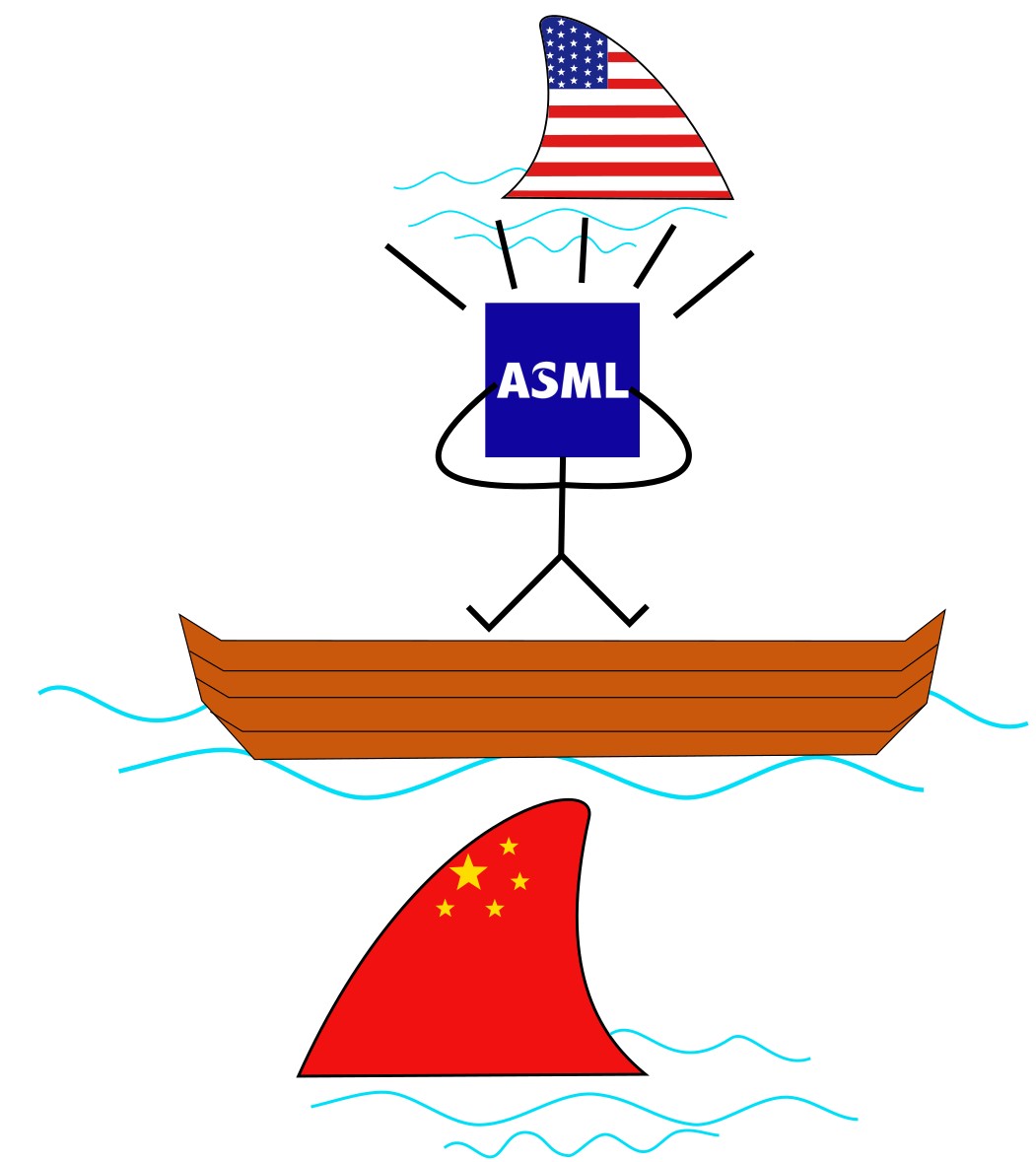
Meanwhile, there are some analysts who believe that a better strategy for EU in semiconductors would be to emulate Japan rather than the USA. Rather than aiming for self-sufficiency across the value chain, Europe must reinforce its strengths in equipment manufacturing (companies like ASML) and advanced chip design and to use these as leverage to access fabrication capacity elsewhere. In other words, they argue for pursuing ‘sovereignty through indispensability’ by ‘controlling inputs, capabilities or chokepoints that other players cannot route around.’
Frequently Asked Questions (FAQ)
Ques: What is a first-of-a-kind (FOAK) project?
It is the first commercial implementation of a new technology, manufacturing process, or facility. FOAK projects involve building advanced fabrication plants or introducing innovative production techniques that have not previously been deployed at scale. These projects are considered strategically important because they help establish new technological capabilities and reduce dependence on foreign manufacturing.
Ques: What is the EU CHIPS Act 1.0?
It is the European Union’s semiconductor strategy introduced in 2023 to strengthen Europe’s chip industry. It aims to increase semiconductor manufacturing, support research and innovation, improve supply chain resilience, and reduce reliance on imports. The act also provides funding for advanced chip manufacturing and encourages investments in strategic semiconductor facilities.
Ques: What is the EU CHIPS Act 2.0?
It is the proposed next phase of the EU’s semiconductor strategy, focusing on expanding manufacturing capacity, accelerating investment, and strengthening Europe’s position in advanced chip technologies. It places greater emphasis on attracting private investment, supporting cutting-edge fabrication plants, and improving coordination across the European semiconductor supply chain.
Ques: What is the difference between EU CHIPS Act 2.0 or 1.0?
EU CHIPS Act 1.0 primarily focused on establishing Europe’s semiconductor ecosystem through public funding, research support, and initial manufacturing incentives. EU CHIPS Act 2.0 builds on this foundation by emphasizing large-scale industrial investment, support for first-of-a-kind manufacturing projects, faster implementation, and stronger measures to improve Europe’s long-term semiconductor competitiveness and supply chain security.
Ques: What is the Business-to-Business Semiconductor Supply Chain Platform?
It is a proposed European initiative that enables semiconductor companies to securely share information about supply chains, production capacity, and potential disruptions. The platform is designed to improve coordination between industry participants, enhance supply chain transparency, and help businesses respond more effectively during semiconductor shortages or other supply chain crises.
European Union Series
-
ASML and Europe’s grip over Semiconductors Chokepoint: Is China chipping away at it?
-
European Union’s Chips Diplomacy: CHIPDIPLO and Other Diplomatic Initiatives concerning Semiconductors
-
European Chips Act 2023: What is it? And Why has EU proposed a new European Chips Act 2.0?
-
What is Strategic Autonomy? And why can’t Europeans stop talking about it?
-
Semiconductors and the European Quest for ‘Technological Sovereignty’: What is it exactly?

Leave a Reply