
3D printing has proven to be a boon for replacement component manufacturing, prototyping, and general purpose usage. The ease with which one can design the required object on a computer and watch it get built in real time is unmatched. The biggest advantage is its affordability; hobbyist 3D printers can go for as low as INR 15,000, while professional tools are from INR 150,000 upwards.
The 3D printing ecosystem also caters to a bustling and thriving community which is involved in sharing computer aided design (CAD) files to developing open source software and firmware for 3D printers. This freedom is now being threatened due to the rise of a new type of crime, one involving 3D printed weapons or ‘ghost guns’. These weapons do not have any serial numbers or manufacturers that may identify the make and model. No technology can really track an item with zero identifiers. This threat is the reason given to introduce restrictions on 3D printer software, but how far will these laws go in terms of broadness or specifying the issue, let’s find out.

Current Laws or Legislation Undergoing Amendments
California AB 1089 Firearms (2023-2024)
This bill would require any person who is using a 3D printer or a CNC machine to manufacture a firearm to possess a California state firearms manufacturing license. Previously only CNC machines whose primary function was to manufacture firearms could not be sold to ordinary citizens; with this bill, the same restriction is being applied to 3D printers whose sole or primary function is to manufacture firearms. Specified 3D printers and CNC machines would be added to the definition of firearm-related products which will make them subject to California’s firearm-industry regulations. Any digital files pertaining to firearm manufacturing cannot be shared or distributed. Civil penalties can go up to USD 25,000 per violation.
New York Executive (EXC) CHAPTER 18, ARTICLE 35 SECTION 837-AA (29-05-2026)
The definition of a 3D printer is outlined and feasibility studies are yet to be conducted to determine whether the introduction of blocking software and firearm blueprint detection algorithms are technologically feasible or not. A technical working group will be created within 90 days which will include experts in additive manufacturing, AI, data security, firearms regulation, public safety and other related sectors. The working group will determine the feasibility and if found feasible then new regulations will be written otherwise implementation will stop until feasibility is demonstrated. A firearm blueprint database will be created to enable 3D printing of firearms or illegal firearm parts and including scans of seized firearms. The library shall be made available to three-dimensional printer manufacturers, vendors with demonstrated expertise in software development, or experts in computational design or public safety, for the development or improvement of blocking technology and firearm blueprint detection
algorithms.
California AB-2047 Firearms: 3-dimensional printing blocking technology. (2025-2026) (May 18, 2026 Amendment) [NOT IN EFFECT]
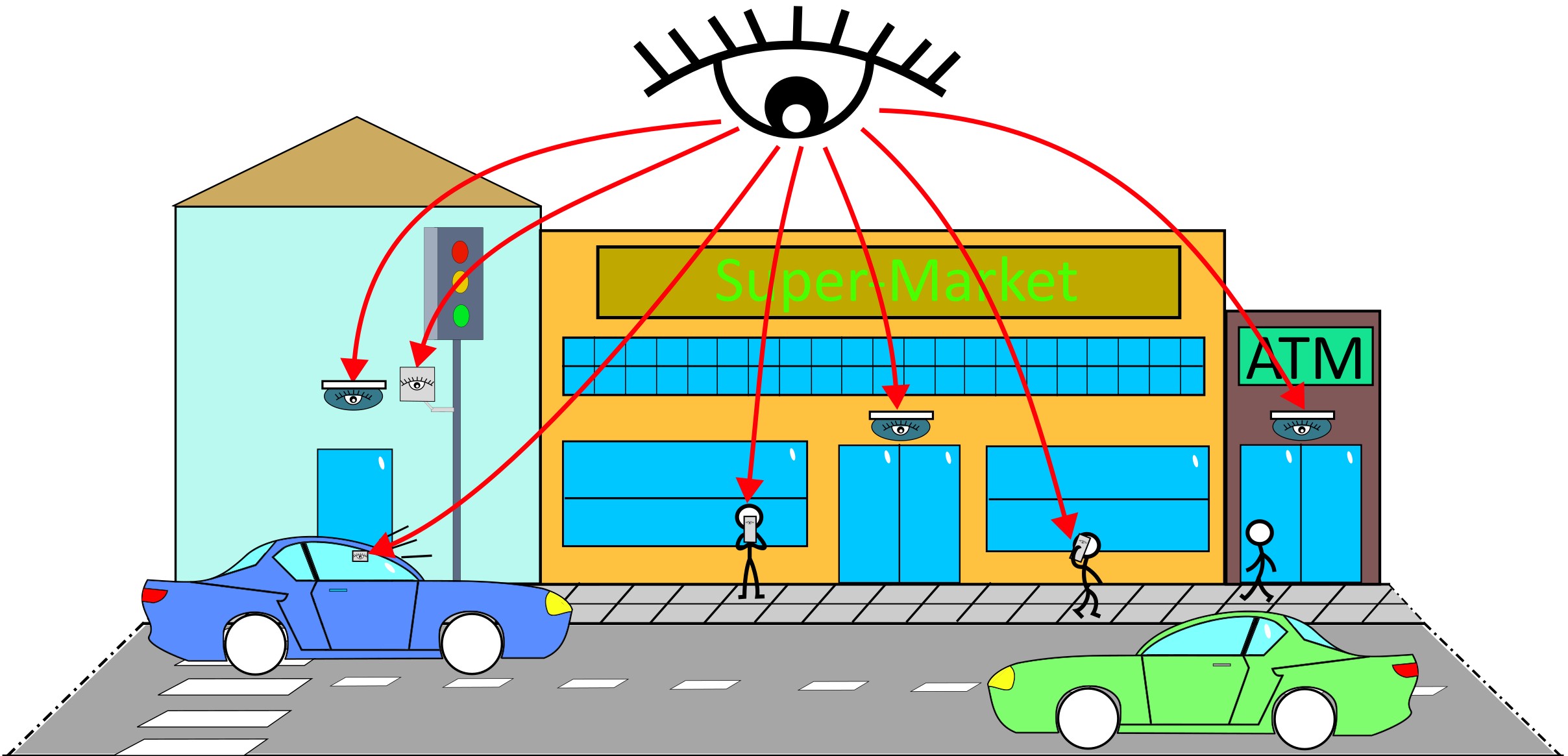
This is where the lines blur between regulation and restriction. This bill would require, on or before July 1, 2028, any business that manufactures 3-dimensional printers for sale or transfer in California to submit to the department an attestation for each make and model of printer and confirmation of the inclusion of a firearm blueprint detection algorithm. Every time a printer receives a CAD file, the algorithm will analyze the drawing and determine whether it can move forward with printing or not. The bill, beginning on March 1, 2029, would prohibit the sale or transfer of 3-dimensional printers that are not equipped with firearm blocking technology and that are not listed on the department’s list of manufacturers with a certificate of compliance verification, except as specified. The bill would authorize a civil action to be brought against a person who sells, offers to sell, or transfers a printer without the firearm blocking technology.
This bill would also make it a crime to knowingly disable, deactivate, uninstall, or otherwise circumvent any firearm blocking technology installed in a 3-dimensional printer. The possession and distribution of digital files containing data of firearm parts and modifications are also banned under this law with the offenders facing civil charges.
Crimes involving 3D printed weapons
The introduction of these measures are not without their reasons. Crimes using 3D printed weapons have seen an uptick which are because of the advances in 3D printing technology.

- Brandon and Justin Nudelman from Staten Island, New York are convicted of running an illegal operation selling untraceable 3D printed firearms.
- Robert Adamski, 29, was caught attempting to print a 3D semi-automatic weapon at his home in east London has been jailed for a total of 15 years.
- Mitchell J. Guerrero, 30, was given a total sentence of 46 months’ imprisonment and three years’ supervised release for manufacturing and trafficking 3D-printed firearms. According to court records, in November 2021, investigators with the Brown County Drug Task Force searched Guerrero’s residence in Green Bay, Wisconsin, and located a 3D printing lab in his basement. Near the lab, investigators seized a fully functional 3D-printed plastic handgun, 3D-printed magazines and rounds, silencers, and a sear that could convert an AR-15 rifle into a fully automatic weapon. Investigators also located evidence that Guerrero was in the initial stages of manufacturing a 3D-printed AR-15.
- On Dec. 9, 2025, officers executed search warrants at Brian Narciso’s (28) home and in associated vehicles. Inside, they found completed firearms, including 3D‑printed handguns, components capable of assembling 24 prohibited firearms, a 3D printer, digital storage devices and computer systems, mobile devices and alleged proceeds of crime. This raid was part of Toronto Police’s project Cluster, an initiative to crack down on ghost guns.
- Dion Matthews, 60, from Burton-on-Trent, was sentenced to 11 years and three months in prison at Stafford Crown Court on May 9 after he admitted using the machine to produce four viable hybrid semi-automatic rifles known as FGC-9s.
- In July 2023, the Häme Police Department in collaboration with the Finland Central Criminal Police revealed that a four-man Neo-Nazi cell based in Lahti District, Finland had planned to carry out racially motivated terror attacks in the country. The cell had used 3D printers to print firearms and numerous gun parts. They had also manufactured a homemade zip gun and had converted a gas gun into a firearm.
The most famous incident regarding a 3D printed weapon was the killing of Brian Thompson on 4th December 2024 by Luigi Mangione. Luigi was found with a ghost gun in his backpack. As of 7th June 2026, whether it was used for the murder is still being determined in court.
These are some of the incidents where a ghost gun was recovered. Untraceable firearms will become a big problem without regulation, but a kneejerk reaction will stop actual research and prototyping if implemented without due consideration.
Ambiguous wording and unintentional victims
The New York Executive (EXC) CHAPTER 18, ARTICLE 35 SECTION 837-AA, has the requirement of a feasibility study which will determine safeguards and protocols for blocking technology. California’s AB-2047 is far broader in this respect. AB-2047 outlines blocking of firearms, firearm precursor parts, and illegal firearm parts. Illegal firearm parts means a firearm precursor part and any part designed and intended for use in converting a semiautomatic weapon into a machine gun, including, but not limited to, a pistol convertor.
The issue comes in the definition of a part from a detection software’s perspective. The detection software will match the drawing to an established database and determine whether the object is a firearm part or not. What if an attachment used in a benign appliance is flagged as a firearm part?


A car door pawl is a small rotating latch component inside the door lock mechanism that catches and holds the door striker, keeping the door closed until the handle releases it. A sear is fundamentally just a latch pawl. In engineering terms, it holds a spring-loaded member until released. It is only natural that they have the same sort of mechanical design.


Another example can be the hammer in a gun. A sewing machine take up lever is used to pull thread from the spool and feed it into the stitch, the thread is pulled tight as the needle rises after stitch to complete it. The hammer stores spring energy and, when released, swings forward to strike the firing pin, which then ignites the cartridge primer. Both of these parts are pivoting mechanical levers.


Springs are usually made of steel but what if one wants to make a temporary polymer spring as a replacement? How will the algorithm determine the use-case of the spring? These are the sorts of criticisms rising against introducing firearm detection algorithms, a student might accidentally design a part that is restricted without his knowledge.
Where will the line be drawn?
The sharing of digital files containing information on firearm manufacturing will see a complete ban. The problem of misidentification extends to this domain too. A mechanical engineer sharing his/her mechanical designs on the internet may face charges if the drawings resemble a firearm component. Open source software for 3D printers will be affected as this isn’t controlled by a single company and applying rules and regulations to such an entity is tough.
What other design may face restriction in this case? Weapons are a significant threat and the USA is already looking at a total breakdown in law and order due to easy access to firearms. New gun designs will generate more restricted drawings and make determining general purpose parts exponentially more difficult. Knives, crossbows, arrows, drones and many other potentially dangerous items can see bans in the future which will culminate in a very complicated detection system.
What will it mean for 3D printing?
A law gaining traction in California has the habit of spreading to the rest of the USA with varying degrees of success. This phenomenon even has a term for it “the California Effect”. Proposition 65 in 1986, the ZEV mandate in 1990, the California Consumer Privacy Act (CCPA) in 2018 are all examples of this phenomenon. Companies will not make machines catering only to one state, the changes might go global because of one state’s laws.
At present,, India does not have any laws regarding the control of 3D printer-based manufacturing. This scenario may change in a few years based on how well the laws in California are enforced. The aim of this article is not to oppose the new legislation, it is to make people aware on how new laws may affect their experience with 3D printing. These laws are required for public safety but not at the cost of the general purpose user. Firearm detection algorithms will need to be made in a very accurate and precise manner to not give false positives on parts that are irrelelvant to a firearm but may possess a similar mechanical function.
I hope I did not find myself in some watchlist after the research I did for this post.
Frequently Asked Questions
Ques: What is 3D printing?
3D printing is an additive manufacturing process in which a three-dimensional object is created by depositing material layer by layer based on a digital design. It enables the fabrication of complex geometries with very low material waste and is widely used for rapid prototyping, customized products, and small-scale manufacturing.
Ques: What is open source software?
Open-source software is software whose source code is made publicly available, allowing anyone to view, modify, and distribute it under the terms of its license. This collaborative development model promotes transparency, innovation, and community-driven improvements, making open-source software widely used in research, education, and industry. Software like Linux, GIMP, LibreOffice, and Blender are the most famous examples of open source software.
Ques: What is an automatic center punch?
It is a hand tool used by machinists and fabricators to make a small indentation in metal before drilling.
Ques: What is the California Effect?
The California Effect is a phenomenon in which regulations introduced in the U.S. state of California influence standards and policies in other states and countries. Because California has a large economy and consumer market, companies often adopt its stricter regulations nationwide or globally rather than producing different versions of the same product for different markets.

Leave a Reply